
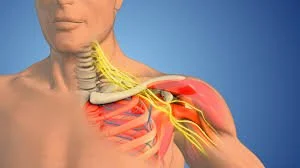
At Be Well Boston, we often work with clients who come in experiencing neck and shoulder pain, arm discomfort, or numbness and tingling in the hands. In some cases, these symptoms are related to Thoracic Outlet Syndrome (TOS).
Thoracic Outlet Syndrome can be confusing and frustrating, especially when symptoms fluctuate or don’t seem to have a clear cause. I’ve been experiencing the symptoms of TOS for a few months now myself, and even as an experienced therapist I had a hard time distinguishing pain and numbness patterns in my own body.
What Is Thoracic Outlet Syndrome?
The thoracic outlet is the space between the collarbone and the first rib, or for a better visual, between your jaw line and the front of your shoulder. A major nerve complex, called the brachial plexus, which feeds into the upper arm, forearm, hand and fingers, as well as major blood vessels pass through this area as they travel from the neck into the arm. When this space becomes compressed—often due to muscle tension, poor posture, repetitive movement, or past injury—it can lead to symptoms such as:
Pain or tightness in the neck, shoulders, or upper back
Numbness or tingling down the arm or into the hand
A feeling of heaviness, weakness, or fatigue in the arm
Occasionally, temperature or color changes in the hand
There are different types of Thoracic Outlet Syndrome, with nerve-related TOS being the most common. Many people with TOS also spend long hours at a desk, have forward head posture, or carry chronic tension in the neck and chest.
In my case, working in a slouched position on clients, combined with time on my bike trainer (both involving a rounded shoulder and forward head posture) eventually caused enough tension to compress the nerves of the brachial plexus. I experienced the first two symptoms listed above, which led me to book a session with Chad, and then a follow up with Jean-Pierre.
How Massage Therapy Can Help
In our work as massage therapists, we focus on releasing tension in areas that commonly contribute to compression, which creates more space to alleviate pressure on the nerves and blood vessels.
Massage may help by:
Reducing muscle tension
Tight muscles in the neck, shoulders, and chest—particularly the scalenes, upper trapezius, and pectoral muscles—can narrow the thoracic outlet. Thoughtful, skillful massage therapy techniques can help soften these tissues and reduce strain.
Supporting better posture
Posture plays an important role in TOS symptoms. Massage therapy can help release chronically shortened muscles and reduce tension in overworked areas, making it easier for your body to find a more comfortable, supported position.
Calming the nervous system
Ongoing pain or nerve irritation can keep the nervous system in a heightened state. Massage encourages relaxation, reduces muscle guarding, and helps many clients feel more at ease in their bodies.
Increasing body awareness
One of the benefits we value most is helping clients become more aware of how their bodies hold tension. This awareness can support meaningful changes between sessions and contribute to longer-term symptom management.
What to Expect From a Session
Every body is different, and our sessions are always tailored to your individual needs and comfort level. For clients with Thoracic Outlet Syndrome, sessions may include work on the neck, shoulders, chest, upper back, and rib area, using a variety of techniques from myofascial work to deep tissue and neuromuscular therapy.
When I worked with Chad, he focused on releasing tension in my rib cage area, upper back, and arm. His work not only released tension in those areas that I had been experiencing for months, but also shed light on my neck and shoulder tension that was contributing, which Jean-Pierre then addressed in a session the following week. Between the two sessions, I’ve experienced marked improvement.
A Team-Based Approach to Care
Thoracic Outlet Syndrome can be complex, and massage therapy is often most effective as part of a team-based approach. Many of our clients find the best results when massage is combined with medical care, physical therapy, movement education, or postural support.
Final Thoughts
Living with Thoracic Outlet Syndrome can be challenging, but you don’t have to manage it alone. Massage therapy can offer relief, support, and a calming space to reconnect with your body.
As always, we’re happy to answer any questions you may have about your own symptoms, and whether we believe massage therapy can help.
- Jim